A new logo meets an old invoice
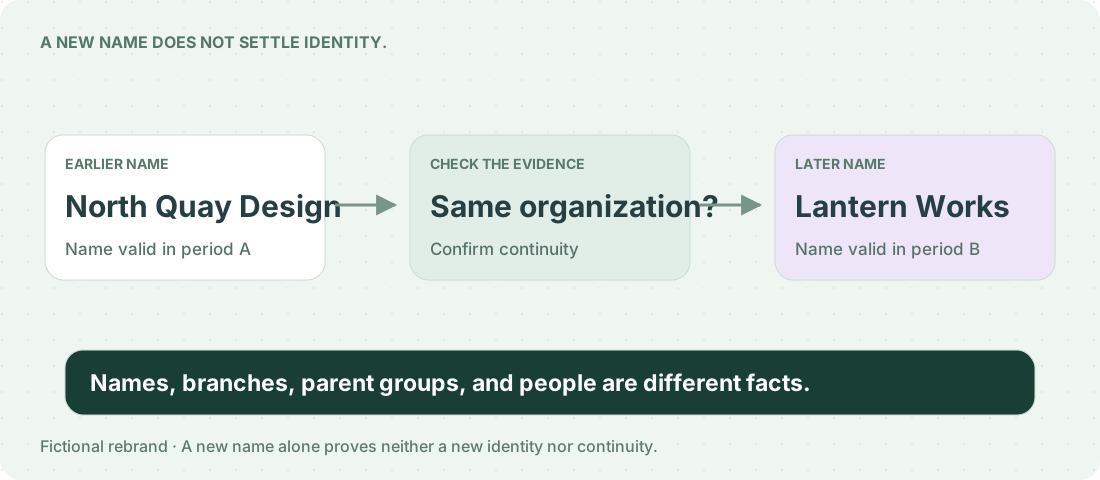
In this invented example, North Quay Design becomes Lantern Works. A supplier creates a new customer record, the finance team sees two overdue balances, and sales celebrates a new account. The purchasing manager, who has not moved desks, wonders whether a rebrand now qualifies for a welcome discount.
A changed name can announce a changed identity, or merely describe an existing organization differently. The name alone does not tell us which happened. That uncertainty travels into every document that points at the organization.
Identity is steadier than a label
Organization describes a group with a defined identity and purpose, such as a company. A name is how people recognize that group; it is not necessarily what makes the group the same across time and systems.
For this illustrative example, the supplier confirms that Lantern Works continues the same customer relationship and retains the old name as historical context. A different scenario—a new purchasing organization formed from part of an old one—could require separate identities and an explicit connection.
The answer comes from evidence about the organizations, not from whether the marketing files share a logo. A beautiful gradient has many uses. Resolving identity is rarely one of them.
The brand may cover several buyers
Now suppose Lantern opens a second company under the same public brand. One business purchases workshop equipment; the other purchases consulting. Combining them by display name makes a tidy customer list but can misattribute orders and invoices.
The customer story asks who actually purchases in each transaction. A trading name, team, location, and purchasing organization may all matter, but each should occupy a relationship that says what it means.
An illustrative model might connect subsidiaries to a parent and offices to locations. Those connections should be stated rather than inferred from a common email domain. Sharing a website is not a complete organizational chart.
People speak for organizations
When the purchasing manager leaves, the supplier changes the contact. That change does not create a new customer and should not detach the organization's earlier purchases from its history.
The person story distinguishes the individual from employment and other roles. The contact story separates both from the mailbox used to reach them. Together, these distinctions allow one organization to have several representatives, each with several ways to communicate.
They also make ordinary questions clearer: who placed this order, which organization purchased, and where should the invoice be sent? One name field cannot answer all three reliably.
Keep the past attached to the right party
An invoice issued before the rebrand can preserve the document's original wording while linking to the organization's continuing identity. Searching the old name can still find it. Current reports can use the current display name without pretending the old document was printed differently.
From order to invoice follows how those relationships carry through transactions. The asset story adds another distinction: an organization may own equipment that sits at someone else's location.
Good organization modelling makes change explainable. It lets a new name become a new label when that is what happened, and a new organization become a separate identity when that is what happened. Sales may lose one imaginary new account. Everyone else gains a clearer history.